


Wimbledon Village: a rare London micro-market for lifestyle and long-term investors
- tim57448
- Nov 25
- 4 min read
Wimbledon Village blends leafy calm, a compact couture high street and excellent transport links — a combination that keeps it firmly on the radar of both lifestyle buyers and buy-to-let / capital-growth investors. This short market-focused blog explains what makes the village attractive and unique, why residents love living there, and the factors that drive its medium-to-long-term capital growth potential.
Attractiveness at a glance
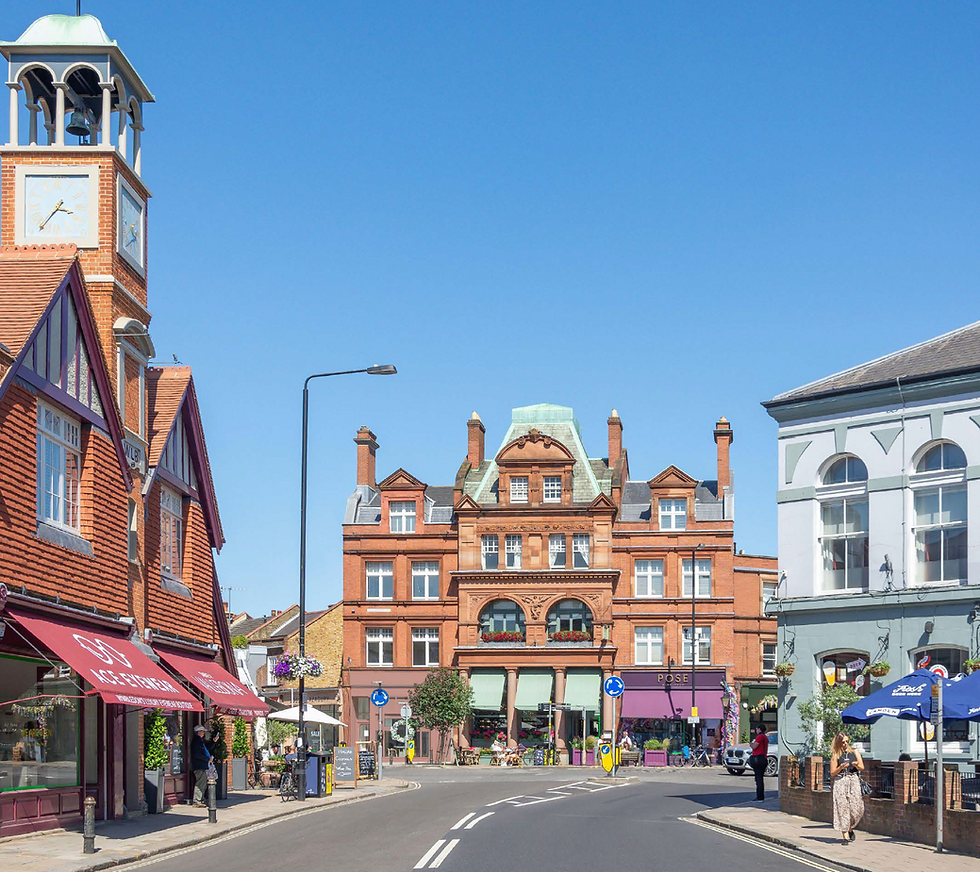
Wimbledon Village reads like a small English market town dropped into south-west London: low-rise period housing, independent boutiques, artisan cafés and quality restaurants clustered around a village green and the edge of extensive commons. The sense of place is immediate and consistent — residents get proximity to London without the scale, noise and anonymity of the inner city. The village’s shops, pubs and leisure offer a high-quality local routine that’s hard to replicate elsewhere in London.
What gives Wimbledon Village its uniqueness
• Historic, human scale and architectural variety. Georgian and Victorian terraces, early 20th-century townhouses and some converted mews and flats produce a varied stock attractive to owner-occupiers and higher-end renters.• Strong, curated high street. A stable mix of independent traders, specialist food and leisure businesses and reputable local eateries creates a walkable, community-centric retail experience that supports premium local demand. • Bordering large protected green space. Wimbledon Common and Putney Heath form one of London’s largest SSSIs (Sites of Special Scientific Interest), delivering unmatched outdoor amenity on the village doorstep. That direct access to protected open space is a consistent driver of local desirability.
Practical life: transport, schools and everyday convenience
For commuting and family life, Wimbledon Village performs strongly.
• Transport connections. Wimbledon station is a multi-mode hub (National Rail, Underground District line, Tramlink and numerous buses), providing frequent services into central London and good regional links — a major attraction for professionals who need reliable, sub-hour journeys to the city. • Education. Wimbledon benefits from several sought-after state and independent schools in easy reach, including well-regarded selective and independent options that are a strong pull for families and sustain owner demand. School quality and catchments are a common driver of pricing in this part of London.
Market snapshot and capital-growth outlook
Wimbledon Village is positioned toward the upper end of outer-London submarkets. Recent sold-price summaries show mean/median sale values comfortably in seven figures for houses, with flats and terraces lower but still above many Zone-3/4 averages — evidence that the village trades at a premium for location and amenity. Sources report average sold prices in the region of £1.3m–£1.65m depending on methodology and period used.
From an investor perspective, two structural arguments support long-term capital resilience:
Scarcity and planning protection. The village’s status as a low-rise, conservation-oriented area plus the adjoining commons restricts large-scale development, limiting supply growth and protecting asset scarcity.
Quality of local demand. A combination of affluent owner-occupiers, families drawn by schools and professionals seeking commuter convenience produces consistent demand for both purchase and rental stock.
Short-term volatility is possible: like many prime London suburbs, price movement has been cyclical. Recent commentary from local market analysts notes modest corrections in 2023–24, but also highlights that a meaningful share of transactions in Wimbledon are still at premium price points (a significant proportion above £1m), indicating persistent high-end demand. For investors with a medium-term horizon (5+ years) and a tolerance for occasional market pauses, Wimbledon Village’s structural attributes support a favourable return profile — especially for well-positioned houses and high-quality family homes.
Why locals choose to live in the village
Residents most commonly cite the combination of community, convenience and green space:
Village feel with city access. You get a genuine neighborhood rhythm — local cafés, a few independent groceries, a pub and regular community events — with fast links into central London.
Family focus. Access to green space, good schools and quieter streets makes the village highly attractive to families.
Lifestyle amenity. The year-round calendar (farmers’ markets, summer events, and of course the tennis fortnight) plus a compact but high-quality hospitality scene supports everyday convenience and weekend leisure without long trips.
Investment considerations (practical checklist)
If you are evaluating Wimbledon Village for an investment purchase, consider:
Asset type matters. Family houses and well-specified period conversions generally offer stronger capital upside and year-round rental demand than small studio flats that rely on transient tenants.
Micro-location within the village. Proximity to the commons, quiet residential streets and access to the high street uplift value; busy or single-aspect flats facing main roads typically trade on a discount.
Yield vs growth trade-off. Expect lower starting yields compared with outer-London alternatives; the investment case is typically more about capital growth and low vacancy than headline rental yield.
Refurbishment sensitivity. Quality finishes and modern family layouts convert more easily and command premium rents; consider capex and planning constraints when pricing refurbishments.
Conclusion
Wimbledon Village is a classic “quality of life” London micro-market: scarce, amenity-rich and family-oriented, with the transport and schooling infrastructure to underpin long-term demand. For lifestyle buyers its appeal is immediate; for investors the long-term case rests on supply constraints, sustained local affluence and strong amenities. Short-term price cycles will occur, but the village’s structural advantages make it an attractive prospect for those seeking stability and capital appreciation over a multi-year horizon.


Comments